Born in Caracas/Nacido en Caracas
By Steve Pastorino
Issue Two: Nonfiction
Photo by Annie Spratt
I pore over my frayed, yellowing birth certificate that declares in shimmering blue ink that I am the hijo legítimo de Robert Stephen Pastorino and Frances Veronica Estepa de Pastorino. REPUBLICA DE VENEZUELA is centered in all caps at the top. The half-sheet of paper is stamped in my favorite color, purple, with the seal of Estado Miranda. The recorder’s cursive font fills in blanks with pirouettes that dance outside the lines. The handwritten capital letters of my name are declarative with loops of emphasis. At the bottom, the fine print explains in Spanish that no one can change this name because it would be inconveniente according to Art. 501 of the Código Civil. This document is one of my only tangible links to a place that carries mythical significance in my mind. I was born in Caracas in 1968. Am I Venezuelan?
Querida Mom, I imagine you gripping the door, the dashboard, your knees, Dad’s arm as he navigated shortcuts through Caracas’ rush hour traffic on the way to the hospital to birth me. It’s fifty-seven years later, and I have never asked you about that November morning. How did you keep it together? You were three thousand miles from the only home you ever knew: San Francisco. It was your first time out of the country, your first year living abroad. Carrying your second child, you were unable to read the street signs, too scared to drive, and thoroughly unfamiliar with the winding calles and avenidas piled like tangled strands of pasta in this capital city at the northern terminus of the Andes. Were you even the same girl in the candy-stripe outfit who ten years earlier met a precocious boy from the Italian neighborhood who promised—no, dared you—to explore the world together? You were removed from the soundtrack of the Rat Pack and Nat King Cole. Away from your mother, grieving and melancholy, when you told her Dad was joining this incomprehensible Foreign Service. No Zim’s. No St. Dominic’s. No Mission district. All of that pushed aside like the overnight bag tossed in the back seat as Dad barked at other drivers in his quest to get you to the doctor on time. The alternative was unthinkable. I couldn’t arrive in the front seat of our American-made car stuck at a stop sign before a grid-locked Caracas intersection, where everyone just yelled.
I see rush-hour traffic and clear skies in Caracas, but only on my laptop. I can almost smell the diesel exhaust rising above a singsong of vendors, horns, and merengue blasting from the bodegas. However, I can only speculate at the oppressive tension in the air. We left five months after I was born, and none of us ever went back. But as “the largest Armada ever assembled in the History of South America” looms offshore, my gut constricts. My beloved Caracas, La Puerta de Venezuela, this imagined paradise of my birth certificate, is under siege by the U.S. government. My anxiety is subconscious—a breathless instant when a sensation roils my stomach, rises through the digestive tunnels, and accumulates at the base of my throat. Why is it that when I look at the maps of the continents, and my pupils dart down from Miami and across the patchwork of Caribbean islands, and my gaze falls on Venezuela, I claim it? A birth certificate is not a lot to go on. So, I call you. Mom, tell me about your Caracas.
I ask many questions, but it’s also an opportunity to share my appreciation for all the ways you cared for me and my two sisters growing up overseas. In a family where Dad’s employment at the State Department had long dominated our family identity, this chat becomes an audio love letter, and a thank you note all in one. I appreciate you. I love you. Our inseparable bond started that day, a devotion of six decades often simmering fragrantly like a pot of caldo in the kitchens we both love, at other times bubbling over in sloppy tears. We both cry like it rains in Caracas: in joy, over miracles like births; in uncertainty, over farewells and goodbyes; in grief over the mise en place of nostalgia and in ritual over the chopping of cebollas.
You recall La Clínica Caurimare as a two-story, whitewashed clinic in the same wealthy neighborhood as the U.S. Embassy. Dad rushed in for assistance after pulling up at the clinic’s gates. Eight pounds and an hour later, you say, I arrived rather uneventfully. Doctor Hoerner—he was German you recall—was awaiting our impending arrival at the facility favored by the diplomatic corps. He spoke English well, and his prenatal care comforted you. When I arrived, you shed tears of happiness and exhaustion. When three-year-old Shannon visited that afternoon to see this infant brother, you tell me she took one entirely unenthused look at me and asked if she could go visit the nurses. Dad was ecstatic as well, but while our family stories always gravitate to his rise through the diplomatic ranks to U.S. ambassador, let’s keep this as a story about you and me.
You describe Caracas as dusty, urban, chaotic. Full of trees but not parklike. Hilly, like San Francisco, with hot, low-slung clouds in place of cold, damp fog. Where your hometown has its bridges and bay views around every corner, the national park El Ávila backgrounded the Caracas skyline. You quickly learned that the mountains that encroach upon the city’s suburbs walled off tantalizing beaches an hour’s drive from our apartment. Unlike San Francisco, any potential whiff of salty air was rinsed daily by lluvias you could set a clock to. Rich with oil in the 1960’s, Venezuela had quickly modernized its capital. Soon after you arrived, an earthquake sent you, Dad, and my sister careening down seventeen flights of stairs out of the Petunia II apartment tower. The damage was so significant that you never entered it again. The generosity of both ex-pats and Venezuelans coalesced around displaced families like ours, and the terrifying terremoto became part of family lore.
Soon, I was born and came of age in all the places you raised me. It turns out you came of age overseas as well. Your adaptation to life as a diplomat’s wife took flight in Caracas, and you played the part so well. Taller than Dad, a beautiful brunette with eyes hinting at your Filipina heritage, you were a picture of grace in so many unfamiliar situations. More importantly to me, , you navigated raising our familia overseas. Dad’s penchant for aventuras took us to unfamiliar places seemingly every weekend, but your sensibilities kept us from getting too sunburned, hungry, or cranky. You learned Spanish, grew comfortable enough to venture to open-air mercados, and befriended neighbors during your kids’ multilingual playdates. Your responsibilities later grew to include formal receptions, State dinners, and hosting cultural events. But first, you became the best mamá I could ask for.
When I ask about your favorite memory of Caracas, you remind me of the cow-shaped ashtray and postcard on a bookshelf at home from a famed cabaret restaurant, Mi Vaca Y Yo. In the foothills surrounding the capital, the proprietor seared delicious steaks, salsa played, and the choicest cocktails flowed. Diplomats and their spouses dined alongside wealthier Venezuelans, sons of the petrolero industry, maybe a ballplayer or two. The undisputed celebrity, however, was Lulu, a 500-kilogram steer with horns as wide as the tables. Under the management’s careful eye and ropes, Lulu periodically sauntered through the dining room; she would pose for photographs if you were fortunate enough to have a Kodak Instamatic with a flash cube. The first time you went, Dad’s enthusiasm to capture a cameo with Lulu was exceeded only by the volume of his voice and the animation of his hand gestures. Alas, he stepped out—to the bathroom perhaps—and missed Lulu entirely. How the table laughed, you tell me.
The child born and quickly swaddled that Tuesday spent the first several days of life in the hospital room with you. You recall that the convalescence felt like a luxury compared with modern-day delivery and discharge standards. Soon after, Dad’s decades of transfers kicked in. It fell on you to bundle me and Shannon off to Hermosillo, Mexico. Three years later, we toddled to Washington, then Lisbon, where Susan was born to complete the family. We all relocated to Bogotá in the late ‘70’s and then, a few years and earthquakes later, your steadying support propelled me into adulthood when I graduated high school in Mexico City. But by inducing me into the world a year after Caracas’ cataclysmic earthquake, you unknowingly seeded in me not just a predilection for disruptive temblors, but an ability to fill in empty spaces in my past in order to construct my identity today. I was born an extranjero in Caracas, but she’s never felt foreign. I claim her as mine.
Which brings us back to our conversation and the warships. In the name of drug interdiction or vague American interests, our newly renamed Department of War has killed more than one hundred Venezuelan citizens in recent months. Some victims likely bear the same birth certificates with purple stamps and looping cursive handwriting. I ask you if you feel the same attachment to Venezuela that I do and your pauses tell me no. When you guys retired in 2004 and returned to San Francisco’s North Beach, you were content to never travel abroad again. You had plenty of catching up to do with your home city and our California-based extended family.
I, on the other hand, long to go back to Caracas. When I had an invite fifteen years ago, Hugo Chávez was still in power. Dad was irate that I would even consider it. In deference to harmony, I declined. Years after his passing, we are finally able to talk about all the ways U.S. government policy dominated our family conversations—heavy on geopolitics but lacking sentimentality. That’s where your parenting came in. You taught me to love broadly and universally. You grounded me in humility and appreciation for people, places, and things. Where Dad introduced me to politics, sports, and national interests, you held me in your lap and encouraged my brave forays into the world.
The two of you had not been home very long before you decided San Francisco had changed so much that you would be more content away from the city’s clatter. You moved to the Napa Valley to live between the vineyards and the redwood trees. Your little casa in St. Helena brims with more memories than I’ll ever have of Venezuela. It’s home.
And as for Caracas, your only souvenir is that clay ashtray in the form of a cow named Lulu. You sweetly tell me that when asked about Venezuela by others, you say the best part was that your son was born there.
For me, Caracas lingers as a treasured birth certificate, your priceless retelling of how I came to be, and a sense of dread that America’s armada is aimed lethally at me. ✦
Note: “Born in Caracas” was written before the capture of Nicolás Maduro and his wife, Cilia Flores, by the United States military on January 3, 2026.
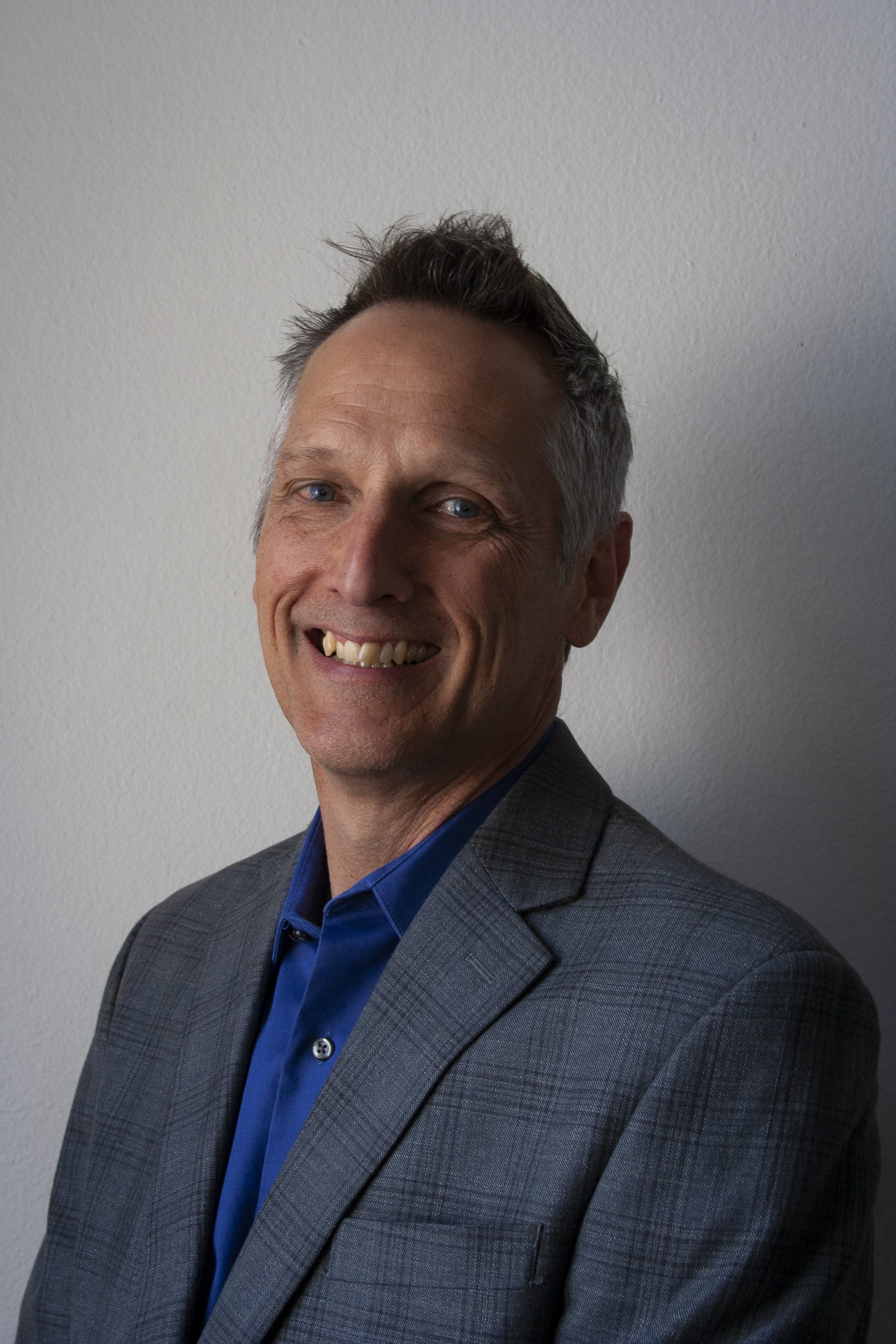
Steve Pastorino writes about identity, equity, and globalism. Trained at Northwestern University’s Medill School of Journalism, Steve has been published in national and regional publications, including Fodor’s Travel Guides, the Las Vegas Review-Journal, and Delta Air Lines Sky magazine. Steve and his family of five are currently docked in Las Vegas on the ancestral homelands of the Nuwuvi / Southern Paiute Tribes. He is pursuing an MFA in Creative Writing at the University of Nevada, Las Vegas.
